1. What Is Business Financing and How Does It Work

Every business needs money to start, operate, and grow. Whether an entrepreneur wants to launch a new company, purchase equipment, hire employees, or expand into new markets, having enough financial resources is essential. However, many businesses cannot cover every expense using their existing income or personal savings. This is where business financing becomes important.
Business financing allows companies to obtain the funds they need to manage expenses, invest in opportunities, and achieve their goals. Depending on their financial position and business plans, owners can choose from different funding options, including bank loans, investor funding, business credit, and personal investment.
Understanding how business financing works helps entrepreneurs make informed financial decisions, manage risks, and select funding options that suit their needs. In this article, we will explore the meaning of business financing, its main types, key funding sources, and how businesses can choose the right option.
What Is Business Financing?
Business financing refers to the process of obtaining money to establish, operate, or expand a business. These funds can support daily expenses, purchase assets, develop products, hire staff, or finance long-term projects.
Businesses may obtain financing from internal sources, such as retained profits and personal savings, or external sources, such as banks, investors, and financial institutions. The most suitable option depends on factors such as business size, financial stability, credit history, funding requirements, and growth objectives.
For example, a small retail business may need financing to purchase additional inventory before a busy season. A technology company, on the other hand, may require substantial funding to develop a new product or hire specialist employees.
In both cases, financing provides access to the money needed to move forward while helping business owners plan how those funds will be used and repaid, where applicable.
How Does Business Financing Work?
Business financing generally begins when a company identifies a financial need. The owner determines how much money is required, what the funds will be used for, and how quickly the business needs access to them.
The next step is to explore available funding options. For example, a business might compare a bank loan with investor funding or consider using its existing profits. Each option has different requirements, costs, benefits, and potential risks.
If the company applies for external financing, the lender or investor may review its business plan, financial statements, revenue, credit history, and ability to meet financial obligations. Approval depends on the provider's requirements and the type of financing requested.
Once funding is secured, the business uses the money for its intended purpose. It must then meet any applicable obligations, such as loan repayments and interest charges or investor agreements involving ownership and decision-making.
Careful planning is important throughout this process. Businesses should understand the full cost of financing and confirm that the chosen option supports their financial goals.
What Are the Main Types of Business Financing?
There are several types of business financing, and each serves different business needs. Understanding the main categories helps owners make suitable funding decisions.
1. Debt Financing
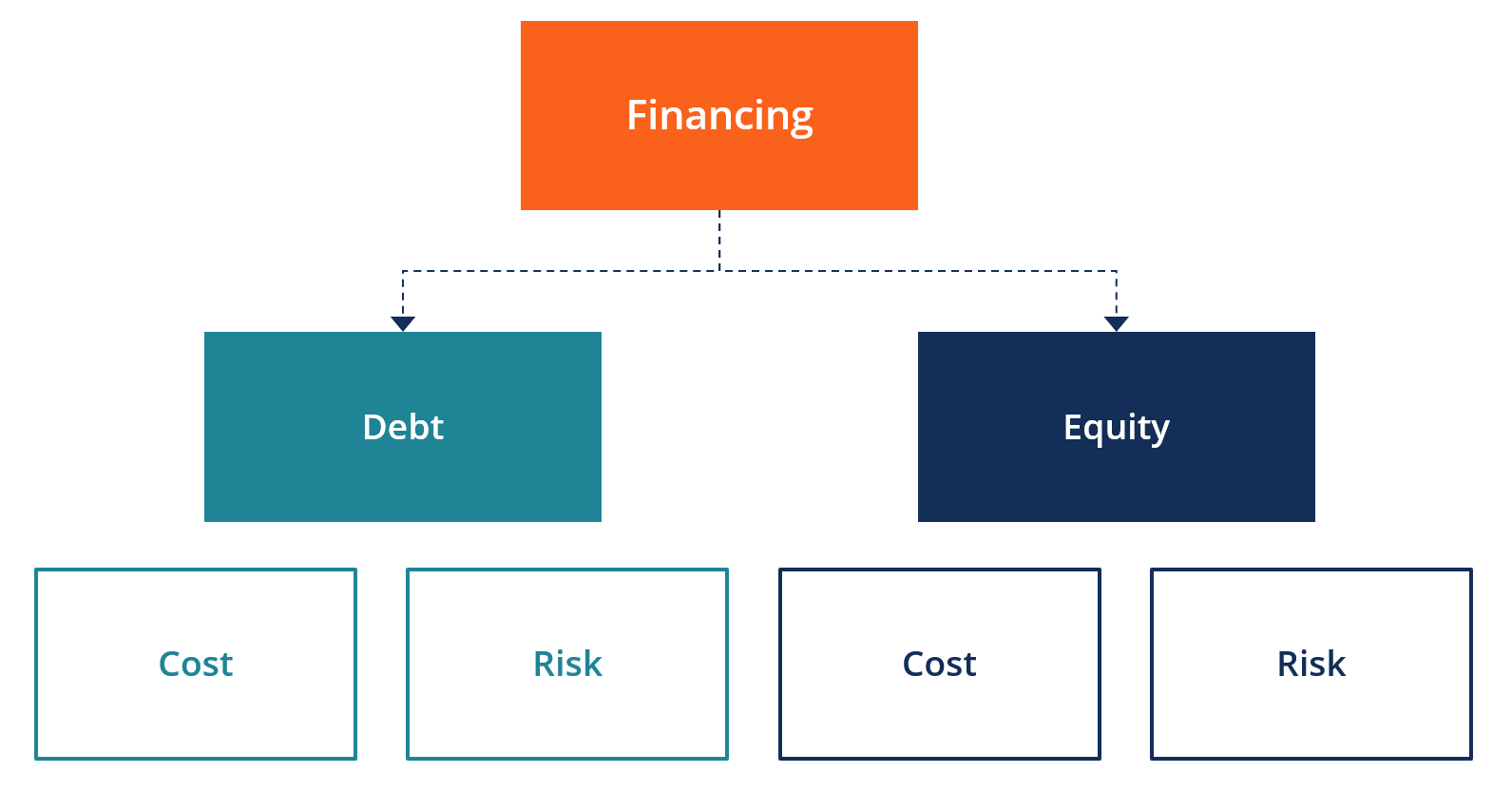
Debt financing involves borrowing money that must be repaid according to agreed terms. Common examples include bank loans, business loans, credit lines, and certain forms of equipment financing.
Businesses often choose debt financing when they need funds but want to retain ownership of their company. However, borrowing usually involves interest, fees, repayment schedules, and sometimes collateral.
Before taking out a loan, business owners should evaluate their expected cash flow and ensure that repayments are manageable.
2. Equity Financing
Equity financing involves raising money by selling a share of business ownership to investors. These investors may include angel investors, venture capital firms, or other individuals and organisations.
Unlike traditional loans, equity funding generally does not require scheduled loan repayments. However, owners give up some ownership and may share control or future profits with investors.
This option can be useful for startups and growing companies that need substantial capital but may not have enough revenue or assets to qualify for conventional borrowing.
3. Internal Financing
Internal financing uses money generated or provided within the business. Examples include retained earnings, savings contributed by the owner, and proceeds from selling unused business assets.
This approach can reduce reliance on external lenders and investors. It may also help owners maintain greater control over their company.
However, internal funds are often limited. Using too much available cash for expansion can leave a business without enough money to cover regular expenses or unexpected challenges.
4. Alternative Financing
Alternative financing includes funding options outside traditional bank loans and standard equity investments. Examples may include crowdfunding, invoice financing, peer-to-peer lending, and certain online business funding services.
These options can provide flexibility for businesses that need specialised funding or cannot access conventional finance. Nevertheless, costs and eligibility requirements vary, so companies should carefully review the terms before agreeing to any arrangement.
What Are the Key Sources of Business Financing?
Businesses can obtain funding from several sources, depending on their circumstances and financial requirements.
Banks and financial institutions: Banks offer business loans, credit facilities, and other financial products. Approval may depend on creditworthiness, financial records, business performance, and available security.
Angel investors and venture capital firms: These investors provide funding in exchange for ownership or other agreed investment terms. They may also offer industry experience and business connections.
Government programmes: Depending on the country and eligibility requirements, government-backed schemes, grants, or small-business support programmes may provide financial assistance.
Crowdfunding platforms: Crowdfunding allows businesses to raise money from multiple contributors. The structure may involve donations, rewards, loans, or equity, depending on the platform.
Personal savings and retained profits: Owners may fund their businesses through personal contributions or reinvested earnings. These sources avoid some external financing costs but may limit the amount available.
Each source has different advantages and limitations. Businesses should compare availability, cost, repayment requirements, ownership implications, and suitability before choosing.
How to Choose the Right Business Financing Option
Selecting the right financing option requires a clear understanding of the company's needs and financial position.
Identify Your Funding Requirements
Start by calculating how much money is needed and what it will support. Short-term working capital requirements may need a different solution from long-term investments in equipment, property, or expansion.
Evaluate Your Financial Position
Review revenue, expenses, cash flow, existing debt, and available assets. A realistic assessment helps determine how much financing the business can afford.
Compare Costs and Conditions
Look beyond the amount offered. Consider interest rates, fees, repayment periods, collateral requirements, investor ownership, and any restrictions attached to the funding.
Consider Ownership and Control
Debt financing may allow owners to retain ownership but creates repayment obligations. Equity financing may reduce repayment pressure but requires sharing ownership and potentially some decision-making authority.
Plan for Future Cash Flow
Make sure the business can meet its financial commitments under realistic conditions. Consider what could happen if sales fall, customers pay late, or operating costs increase.
Comparing these factors helps business owners choose financing that supports their objectives without creating unnecessary financial pressure.
Common Mistakes to Avoid When Seeking Business Financing
Businesses can face difficulties when they select funding without proper preparation. One common mistake is borrowing more money than necessary, which can increase costs and repayment pressure.
Another mistake is focusing only on the amount offered rather than understanding the total cost and terms. Business owners should also avoid relying on overly optimistic sales forecasts when estimating their ability to repay debt.
Failing to compare multiple funding sources can lead to missed opportunities for more suitable terms. In addition, using short-term financing for long-term projects may create cash flow problems if repayment is due before the investment produces returns.
A clear business plan, realistic financial projections, and careful review of funding agreements can help reduce these risks.
Conclusion
Business financing helps companies obtain the money needed to start operations, manage expenses, invest in opportunities, and support growth. The main options include debt financing, equity financing, internal funding, and alternative funding sources, each offering different benefits and responsibilities.
Choosing the right option depends on the amount required, the purpose of the funding, the business's financial position, and its long-term goals. By comparing costs, repayment terms, ownership implications, and potential risks, business owners can make more informed decisions.
Ultimately, effective business financing is not simply about securing money. It is about obtaining the right funding on suitable terms and using it responsibly to build a stable and sustainable business.
Join the Conversation
Share Your Thoughts
Related Articles

What Are the Benefits of University of Wolverhampton?
Explore the courses offered by the University of Wolverhampton, including undergraduate and postgraduate programs, popular subjects, and study options for international students.

University of Wolverhampton Entry Requirements Guide
University of Wolverhampton foundation year: entry requirements, IELTS 5.5, and fees from £17,600, plus free guidance on your eligibility.

What Are the Key Rules of Contract Law
Contract lawyer in Lahore for drafting, reviewing, and amending contracts, and resolving contract disputes. Book a consultation with Rana & Baig Law Firm.